Showing posts with label The Godfather. Show all posts

Monday, September 16, 2019

Fun facts for fans of 'The Godfather' trilogy

Movie fans and critics agree that "The Godfather" trilogy is worth seeing more than once. The film franchise catapulted author Mario Puzo, director Francis Ford Coppola, and actors Al Pacino and Marlon Brando to worldwide fame. Supporting actors James Caan, Robert Duvall, Diane Keaton, and Andy Garcia also received critical acclaim for their performance in the movie. Here are some fun facts that might interest fans of the trilogy.
Image source: Cnn.com
 Marlon Brando was not the first choice

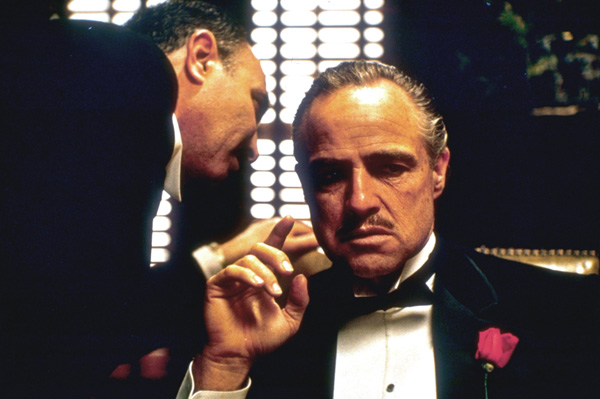
Paramount was against the idea of casting Marlon Brando as Don Vito Corleone. However, author and screenwriter Mario Puzo and Coppola knew that he was their guy early on. For fans of the film like Richard Ohlhaber, no other guy can top Brando's iconic performance. Despite being surrounded by controversy, he totally made the character his own.

Don's Cat

Image source: Fandom.com
The iconic cat scene wasn't really part of the script. Director Francis Ford Coppola found a stray cat in the studio and thought of a good idea. It's a good thing Marlon Brando liked cats, which made the scene look natural. Perhaps the cat got too comfortable because the purring sounds had to be dubbed over.

Robert De Niro auditioned for the role of Sonny

Robert De Niro was one of the Italian-American actors who auditioned for the movie. However, the role of Sonny went to James Caan. Despite this casting decision, the producers loved him and offered him the part of Paulie. De Niro turned down the role to star in another film but finally said yes to playing the young Don Vito in "The Godfather II," his first Oscar-winning role.

Born and raised in Chicago, Richard Olhlaber is a big fan of the Chicago Bulls and is fond of movies like "The Godfather." Visit this blog for more updates on him and his interests.

Tuesday, July 11, 2017

One-Time Offer: Leadership Lessons From 'The Godfather'

If someone says that “The Godfather” is one of the greatest American films ever made, maybe a throng of people would react and tell him that this is a gross understatement. For starters, it is the best and certainly a highly influential film in its genre. A gangster movie won’t ever be the same again. It was difficult to escape the looming shadow of Vito Corleone even on a good day. And the whole movie screams “iconic” from beginning till end. If a person is fortunate enough, Nino Rota’s “Speak Softly Love” won’t be stuck in his head for ages.

Image source: flickr.com

However hard it is for anyone to imagine that people can learn a thing or two about leadership from this critically acclaimed classic, the Corleones’ approach to issues and the situations encountered by the leading characters here in this film offer valuable insights. One cannot overemphasize the fact that this is not to condone or support criminal and immoral acts. There are general lessons, though, which do not involve those acts, that can help leaders achieve goals.

One of the clearest takeaways from the movie is the fact that building a network is as important as keeping an organization’s own core resources strong and independent. A group must acknowledge the necessity of forging ties and interconnected mutual relationships with other institutions that might help them survive in the most trying of times. Relationships outside of the immediate workplace can also surprisingly provide a perspective on issues and problems that beset the organization. The Corleones fiercely endorse familial closeness and friendships.

Image source: flickr.com

Resilience when faced with the most troublesome circumstances and the need for backup plans and other preparations for the future are necessary considerations that an effective leader must take into account. Executions work primarily because of careful and strategic planning. Business eventualities are dynamic, not static. One must plot possible solutions to future problems.

Richard Ohlhaber lists 'The Godfather' as one of his favorite movies. To learn more about his interests, follow this blog.


Wednesday, November 23, 2016

The Godfather's Penumbra Over American Filmmaking

Adapted from the Mario Puzo novel of the same title, “The Godfather” is an icon of modern American cinema and has left an indelible mark on the film industry and popular culture. Besides its oft caricatured depiction of crime families, the story, crafted by master director Francis Ford Coppola, revolutionized cinematic storytelling.

Image source: wikimedia.org

The Corleone family depicted in the film was in most respects the archetype for the image of organized crime in American popular culture. Far from being a card-carrying villainous mastermind, Don Vito was portrayed as a tough but fair figure that talks highly about the value of family and honor, the very epitome of the noble demon in the cinematic age.

Image source: amazon.com

Noble as he might be, the Don was no saint. The cinematography beautifully juxtaposes Don Vito's fair temperament in person with the cutthroat means of intimidation he and his family (the particularly repugnant Sonny in particular) used to accomplish their goals. It is this juxtaposition of cruelty, coupled with Don Vito's desire to turn legitimate (and his dismay at Michael's eventual descent to criminality), that firmly plants the film series against the glamorization of organized crime. This colossal bait and switch had been revolutionary in not only portraying gangsters in a non-romanticized light but delivering nuanced protagonists or anti-heros.

The film's narrative was, in many respects, a tragedy, chronicling the ruthless rise of Michael Corleone and his loss of morality and contrasting it with his father's desire to leave criminality behind. This cycle of attempting and failing at redemption continues to resonate as one of the defining narratives in any medium of the 2oth century.

Richard Ohlhaber is a big fan of movies like “The Godfather.” Visit this blog for more information on his varied interests.